Cape Buffalo Hunting in South Africa | Lapeng Safaris
Dive into the heart-pounding pursuit of Africa’s legendary "Black Death"—one of the most formidable members of the Big Five

Fair-Chase Dangerous Game Hunting in the Rugged Bushveld of Limpopo & Mpumalanga
Widely regarded as the ultimate test of nerve, fieldcraft, and shot placement, the Cape Buffalo (Syncerus caffer) is notorious for its unpredictable nature, sheer strength, and aggressive defense mechanisms. Earning its nickname "The Black Death," an old dagga boy (bachelor bull) fears nothing in the African bush.
At Lapeng Safaris, we offer authentic, fair-chase dangerous game hunts across sprawling concessions in Limpopo and Mpumalanga. Navigating dense acacia thickets, riverine brush, and rocky terrain, our hunts deliver the thrilling, close-quarters track-and-stalk experience every dangerous game hunter seeks.
Trophy Details
Rowland Ward Minimum - 42" Total Width
Safari Club International (SCI) Minimum - 101" Score
Lapeng Target Quality - 38" – 42"+ Hard-Bossed Mature Dagga Boys
Hunting Methods - Traditional tracking on foot; spot-and-stalk
Minimum Legal Caliber - .375 H&H Magnum (South African legal minimum)
Recommended Caliber - .375 H&H, .416 Rigby, .458 Lott (Min 300gr+ premium solid/bonded soft-point bullets)
Bow Setup - Minimum 80+ lbs draw weight, heavy arrow setup (750+ grains), dangerous-game rated broadheads

Prime Habitat
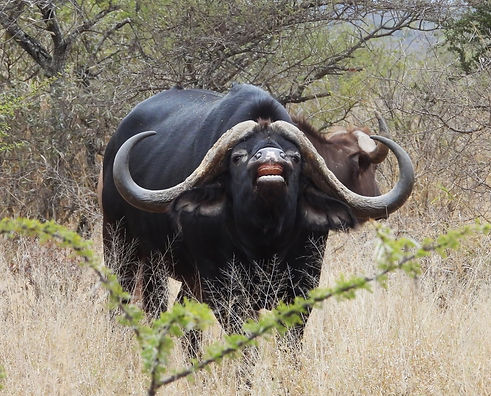
Old bulls often separate from breeding herds to form small bachelor groups or solitary lives—earning them the native term "Dagga Boys" (muddy boys) due to their habit of wallowing in mud holes.
They favor thick riverine scrub, dense bushveld, and tall reed beds near permanent water. Their keen sense of smell and acute hearing, combined with thick cover, make tracking an old bull on foot an adrenaline-fueled challenge.
Photos Credit - Pieter Kloppers Wildlife
The Hunting Experience: Terrain & Tactics
1. Traditional Foot Tracking
Our PHs and master trackers locate fresh tracks (spoor) at waterholes or feeding routes at dawn. From there, the stalk is entirely on foot, cutting through thick cover, assessing wind shifts, and matching the bull's pace until you close the distance for a clean shot.
2. Assessing the Boss & Maturity
We strictly target old, past-prime bulls with fully fused, heavy helmet bosses and worn tooth wear. Taking aged bulls ensures sustainable wildlife management and gives hunters a true battle-tested trophy.
Prime Season & Regional Advantages
The Cape Buffalo can be hunted throughout the year. The early season is more challenging when the veld is thick and green, making hunts later in the year more ideal.
The Middleveld Advantage: Unlike flat, open savannahs, the broken topography around our home base allows for varied, multi-elevation stalks. The rich combination of mountain scrub, sweet thorn acacia, and permanent water sources supports dense populations of kudu alongside species like Cape Buffalo, Bushbuck, and Impala.
Frequently Asked Questions
1. What is the legal minimum caliber for Cape Buffalo in South Africa?
By South African legal regulations, the .375 H&H Magnum is the absolute minimum allowed for hunting dangerous game. We strongly recommend heavy premium bullets (such as Swift A-Frame soft points for the first shot, followed by solids).
2. What typical shot distances can I expect?
Dangerous game tracking in dense cover usually results in shot opportunities between 25 and 60 yards. Quick, accurate off-hand shooting or shooting off heavy tripod sticks is essential.
3. Can a Cape Buffalo hunt be combined with plains game?
Absolutely. A Buffalo safari can easily be expanded into a multi-species hunt including species like Sable, Kudu, Nyala, Bushbuck, and Impala.